Mortgage loan application for freelancers: 7 Powerful Tips for a Successful Mortgage Loan Application for Freelancers

Navigating a mortgage loan application for freelancers can feel like climbing a mountain without a map. But with the right strategy, proof of income, and lender knowledge, freelancers can secure home loans just like traditional employees.


Understanding the Challenges of a Mortgage Loan Application for Freelancers

Freelancers often face unique hurdles when applying for a mortgage. Unlike salaried employees, their income can fluctuate, making lenders cautious. Traditional mortgage underwriting relies heavily on consistent pay stubs and W-2 forms—documents most freelancers don’t receive. This creates a perception of financial instability, even if the freelancer earns more than the average employee.
Income Variability and Lender Perception
One of the biggest challenges in a mortgage loan application for freelancers is inconsistent monthly income. Lenders use debt-to-income (DTI) ratios to assess risk, and unpredictable earnings make it harder to prove repayment capability. A freelancer might have a stellar annual income, but if three months show zero earnings, underwriters may hesitate.
- Lenders typically average income over two years.
- Seasonal work can skew income reports.
- Short gaps between gigs may be misinterpreted as unemployment.
“Freelancers need to prove not just income, but sustainability,” says mortgage expert Jane Holloway of NerdWallet. “It’s about consistency, not just cash flow.”
Documentation Gaps and Proof of Income
Most mortgage lenders require two years of tax returns, but even that may not suffice for freelancers. Since many deduct business expenses, their net income appears lower than gross earnings. This can hurt loan eligibility. Additionally, 1099 forms don’t reflect ongoing contracts or future income, making it harder to forecast stability.
- Tax returns may underreport true earning potential.
- No employer verification letter is available.
- Bank statements may show irregular deposits.
Some lenders now accept alternative documentation, such as 12 months of bank statements or signed client contracts, to paint a fuller picture of financial health.
mortgage loan application for freelancers – Mortgage loan application for freelancers menjadi aspek penting yang dibahas di sini.
How to Strengthen Your Mortgage Loan Application for Freelancers
While the system wasn’t built for freelancers, it’s evolving. You can take proactive steps to boost your credibility and improve approval odds. The key is preparation, transparency, and choosing the right lender.
Maintain Impeccable Financial Records
Start by organizing your finances like a small business owner. Keep detailed records of all income, expenses, invoices, and client contracts. Use accounting software like QuickBooks or FreshBooks to generate professional financial statements. Lenders appreciate clean, auditable records.
- Track all income sources monthly.
- Separate personal and business expenses.
- Generate profit and loss statements quarterly.
Having a dedicated business bank account also helps demonstrate financial discipline.
Build a Strong Credit Profile
Your credit score plays a crucial role in any mortgage loan application for freelancers. A high score (740+) signals reliability, even if your income structure is non-traditional. Pay bills on time, keep credit utilization below 30%, and avoid opening new credit lines during the application process.
- Check your credit report for errors via AnnualCreditReport.com.
- Dispute inaccuracies with credit bureaus.
- Consider a credit-builder loan if your history is thin.
“A strong credit score can offset income volatility,” notes financial advisor Mark Rivera. “It’s the closest thing to a universal trust signal.”
Proven Documentation Strategies for a Mortgage Loan Application for Freelancers
Documentation is your strongest weapon. The more evidence you provide of stable, ongoing income, the better your chances. Lenders want to see that you can repay the loan, regardless of your employment label.
mortgage loan application for freelancers – Mortgage loan application for freelancers menjadi aspek penting yang dibahas di sini.
Use Tax Returns Effectively
Most lenders require two years of federal tax returns (Form 1040) and accompanying schedules (Schedule C for sole proprietors). They’ll look at your net profit, not gross revenue. If your deductions are high, consider consulting a CPA to optimize your filings for mortgage purposes—without compromising tax legality.
- Ensure consistency in income reporting across years.
- Avoid drastic income drops between years.
- Provide explanatory letters for anomalies.
Some lenders allow “income averaging” if one year was unusually low due to market conditions or personal circumstances.
Leverage Bank Statements and Profit & Loss Statements
Alternative documentation is increasingly accepted, especially by portfolio lenders and non-QM (non-qualified mortgage) lenders. A 12- or 24-month bank statement program can verify cash flow directly. These programs analyze deposits to confirm consistent income.
- Choose a lender that accepts bank statement programs.
- Ensure deposits are clearly labeled and recurring.
- Provide a signed P&L statement from your accountant.
According to Investopedia, bank statement loans are growing in popularity among self-employed borrowers, with some lenders requiring only 18 months of clean banking history.
Choosing the Right Lender for Your Mortgage Loan Application for Freelancers
Not all lenders are created equal. Some specialize in self-employed borrowers and understand the nuances of freelance income. Picking the wrong lender can lead to unnecessary rejections and credit score dings from hard inquiries.
mortgage loan application for freelancers – Mortgage loan application for freelancers menjadi aspek penting yang dibahas di sini.
Conventional Lenders vs. Portfolio Lenders
Conventional lenders follow Fannie Mae and Freddie Mac guidelines, which often require strict documentation. Portfolio lenders, however, keep loans in-house and can set their own criteria. They’re more flexible with income verification and may accept non-traditional proof.
- Portfolio lenders often offer bank statement loans.
- They may consider future contracts as income.
- Interest rates may be slightly higher due to perceived risk.
Research lenders like United Wholesale Mortgage or PennyMac, which have programs tailored for self-employed individuals.
Working with Mortgage Brokers Who Specialize in Freelancers
A knowledgeable mortgage broker can be a game-changer. They have access to multiple lenders and can match you with institutions that accept freelance income structures. Look for brokers with NMLS certification and experience in self-employed financing.
- Ask for client testimonials from other freelancers.
- Verify their licensing via the NMLS Consumer Access website.
- Ensure they disclose all fees upfront.
“A good broker doesn’t just find you a loan—they find you the right loan,” says loan officer Tina Lopez. “For freelancers, that difference is everything.”
Alternative Mortgage Programs for Freelancers
If traditional routes fail, don’t lose hope. Several alternative mortgage programs are designed for non-traditional earners, including freelancers, gig workers, and independent contractors.
Bank Statement Mortgage Loans
These loans allow borrowers to qualify based on bank deposits rather than tax returns. Typically, lenders require 12 to 24 months of personal or business bank statements. They average monthly deposits to determine qualifying income.
mortgage loan application for freelancers – Mortgage loan application for freelancers menjadi aspek penting yang dibahas di sini.
- Great for freelancers with high deductions.
- May require a higher down payment (10-20%).
- Available through private lenders and credit unions.
For more details, visit Consumer Financial Protection Bureau’s guide on alternative mortgage products.
Non-QM (Non-Qualified Mortgage) Loans
Non-QM loans don’t follow standard underwriting rules set by government-sponsored enterprises. They’re ideal for freelancers with complex finances, high net worth, or irregular income. These loans often use asset-based qualification or stated income models.
- No DTI ratio requirements in some cases.
- Higher interest rates and fees apply.
- Require larger down payments and strong credit.
While riskier, Non-QM loans can be a lifeline for experienced freelancers with solid financial foundations.
Improving Approval Odds: Down Payments and Debt Management
Even with perfect documentation, approval isn’t guaranteed. However, you can significantly boost your chances by managing key financial levers: down payment size and existing debt.
Make a Larger Down Payment
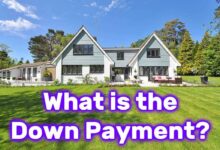
A larger down payment reduces the lender’s risk. For a mortgage loan application for freelancers, putting down 20% or more can offset concerns about income variability. It also eliminates the need for private mortgage insurance (PMI), saving money long-term.
mortgage loan application for freelancers – Mortgage loan application for freelancers menjadi aspek penting yang dibahas di sini.
- 20% down is ideal for conventional loans.
- Some lenders offer flexibility with 10-15% down for strong profiles.
- Consider gift funds from family if allowed by the lender.
Freelancers who save aggressively or use windfalls (like project bonuses) can accelerate their down payment fund.
Reduce Existing Debt Before Applying
Lowering your debt-to-income (DTI) ratio is critical. Pay off credit card balances, auto loans, or personal loans before submitting your application. A DTI below 36% is ideal, though some lenders accept up to 43-50% for strong borrowers.
- Avoid new debt during the mortgage process.
- Consolidate high-interest debt if beneficial.
- Delay large purchases (cars, appliances) until after closing.
“Debt management is half the battle,” says mortgage consultant David Kim. “Freelancers who control their liabilities stand a much better chance.”
Common Mistakes to Avoid in a Mortgage Loan Application for Freelancers
Even experienced freelancers make avoidable errors that derail their mortgage dreams. Awareness is the first step to prevention.
Applying Too Early Without Preparation
Many freelancers rush into applications without organizing their finances. Submitting too early—before stabilizing income, fixing credit, or gathering documents—leads to rejection. Take 6-12 months to prepare.
- Don’t apply while between major contracts.
- Wait until you’ve completed two full tax years.
- Build a financial cushion before shopping for homes.
Mixing Personal and Business Finances
Using a single bank account for everything makes it hard to prove income. Lenders may see frequent transfers as instability. Open a separate business account and maintain clean records.
mortgage loan application for freelancers – Mortgage loan application for freelancers menjadi aspek penting yang dibahas di sini.
- Use business accounts for client payments.
- Pay yourself a consistent salary if possible.
- Keep receipts and invoices digitally archived.
This separation not only helps with mortgages but also simplifies tax filing and audits.
Future Trends: How the Mortgage Industry Is Adapting to Freelancers
The gig economy is growing—over 60 million Americans freelanced in 2023, according to Upwork. As a result, lenders are slowly adapting. New technologies and regulatory shifts are making mortgage loan applications for freelancers more accessible.
AI and Automated Income Verification
Artificial intelligence is transforming underwriting. Platforms like Plaid and Finicity allow lenders to securely connect to bank accounts and verify income in real time. This reduces reliance on tax returns and opens doors for freelancers with complex cash flows.
- AI can identify recurring deposits from clients.
- Automated systems reduce human bias in income assessment.
- Integration with accounting software streamlines verification.
Companies like Rocket Mortgage already use AI-driven platforms to speed up approvals for self-employed applicants.
Regulatory Support for Non-Traditional Workers
While federal guidelines still favor W-2 employees, there’s growing advocacy for inclusive lending standards. The CFPB has urged lenders to consider alternative data, and Fannie Mae has expanded its acceptance of self-employed documentation.
mortgage loan application for freelancers – Mortgage loan application for freelancers menjadi aspek penting yang dibahas di sini.
- Some states offer first-time homebuyer programs for gig workers.
- HUD-backed counseling services assist freelancers.
- Industry coalitions are pushing for standardized freelance income verification.
“The system is catching up,” says housing policy analyst Elena Torres. “Freelancers shouldn’t feel like second-class borrowers anymore.”
Can I get a mortgage if I’ve only been freelancing for one year?
Yes, but it’s more challenging. Most lenders require two years of self-employment history. However, some non-QM or portfolio lenders may accept one year if you have prior experience in the same field or strong credit and assets. Providing client contracts and bank statements can strengthen your case.
Do I need to show two years of tax returns for a mortgage loan application for freelancers?
Typically, yes. Conventional lenders require two years of federal tax returns and Schedule C or K-1 forms. However, alternative lenders may accept 12-24 months of bank statements instead, especially in bank statement loan programs.
How do lenders verify freelance income?
mortgage loan application for freelancers – Mortgage loan application for freelancers menjadi aspek penting yang dibahas di sini.
Lenders verify freelance income through tax returns, bank statements, 1099 forms, and profit & loss statements. Some use automated systems to analyze cash flow. The goal is to confirm consistent, sustainable earnings over time.
Are interest rates higher for freelancers?
Not necessarily based on employment type alone. However, freelancers who use non-traditional loan programs (like bank statement or Non-QM loans) may face slightly higher rates due to increased lender risk. Strong credit and a large down payment can offset this.
What’s the minimum credit score for a mortgage loan application for freelancers?
Most lenders prefer a score of 620 or higher for conventional loans. For government-backed loans like FHA, it can be as low as 580 with a 3.5% down payment. Higher scores (740+) improve approval odds and secure better rates.
mortgage loan application for freelancers – Mortgage loan application for freelancers menjadi aspek penting yang dibahas di sini.
Securing a mortgage as a freelancer is no longer an impossible dream. With the right preparation, documentation, and lender choice, a mortgage loan application for freelancers can succeed. The key is to present stability in a non-traditional framework—proving consistency through records, credit, and cash flow. As the financial world adapts to the gig economy, more tools and programs are emerging to support independent workers. By avoiding common pitfalls and leveraging modern solutions, freelancers can achieve homeownership with confidence.
Further Reading: